 MORE LOCATIONS
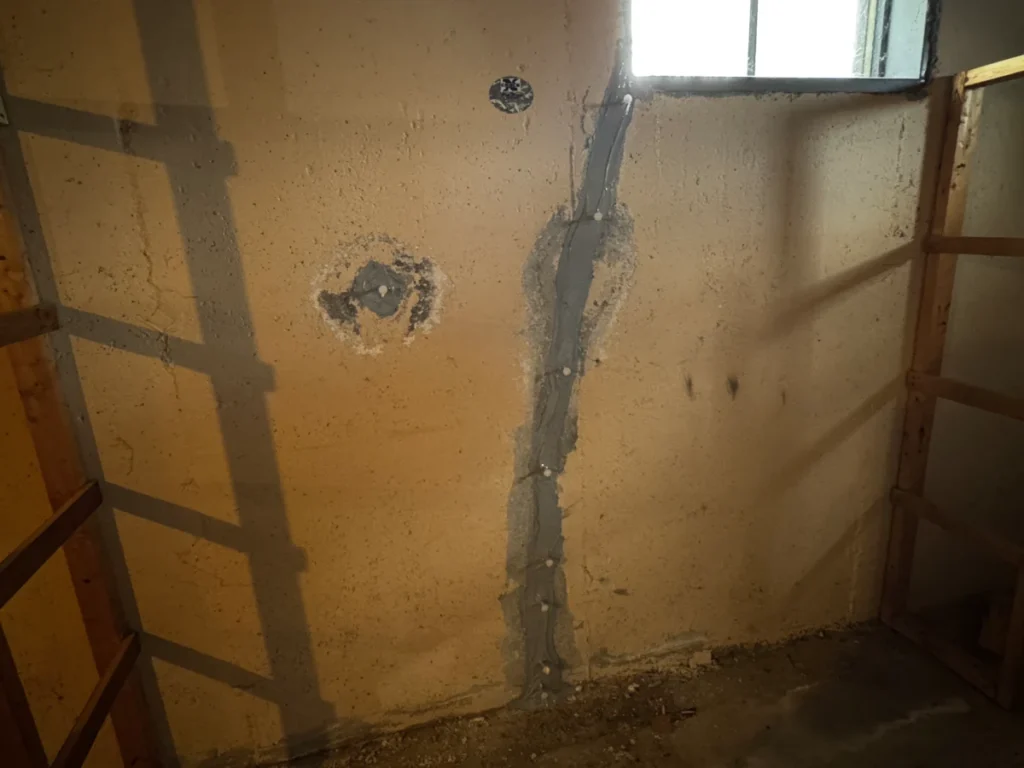
Few things frustrate a homeowner quite like discovering a pool of water at the base of a basement wall after a heavy New England rainstorm—especially when the source isn’t a visible foundation wall crack, but the entry point where a main water pipe, sewer line, or electrical conduit enters the home.
Penetrations through poured concrete foundations are unavoidable in home construction. However, in regions like Massachusetts, New Hampshire, Maine, Connecticut, and Rhode Island, extreme weather patterns turn these necessary utility entries into prime pathways for active water leaks. Understanding why these utility penetration seals fail and how high-pressure resin injection permanently resolves them is essential for keeping your basement dry year-round.
The Hidden Leak Vulnerability: Utility Lines & Snap Tie Rods
Poured concrete foundations require precise openings and hardware to be installed during construction. Over time, two primary utility vulnerabilities emerge along basement walls:
What Is a Pipe Penetration?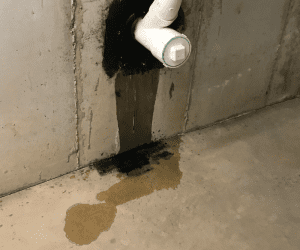
A pipe penetration is any opening core-drilled or cast into a concrete foundation wall to allow utility lines—such as main water supply lines, sewer discharge pipes, gas lines, electric conduits, or sump discharge pipes—to pass through from the exterior soil into your home.
What Are Snap Tie Rod Holes?
When builders pour concrete foundation walls, they use steel tie rods (or snap ties) to hold the heavy wooden form panels together against the weight of wet concrete. Once the concrete cures and the forms are removed, builders snap off the ends of these metal rods, leaving a steel remnant buried inside an 8-to-10-inch hole through the full thickness of your concrete wall.
The New England Hydrostatic Factor
New England homes face intense climate pressures. High water tables, combined with rapid spring snowmelts and severe autumn downpours, create heavy hydrostatic pressure in the soil around your foundation. Ground moisture actively seeks out the path of least resistance—which leads directly to the micro-gaps around rigid utility pipes and aging steel tie rods.
3 Reasons Hydraulic Cement Patches Fail around Basement Pipes
Homeowners and general contractors often attempt to fix basement pipe leaks by applying hydraulic cement, silicone caulk, or hardware store expanding foam around the pipe entry on the interior wall face. Unfortunately, these surface patches almost always fail within 1 to 2 seasons due to three core physical factors:
1. Differential Thermal Expansion & Pipe Vibration
Different materials expand and contract at vastly different rates as temperatures fluctuate. PVC, copper, and cast iron utility pipes vibrate from water flow and shift with seasonal temperature swings. Rigid surface materials like hydraulic cement cannot absorb this movement, causing the bond between the patch and the pipe to crack and separate.
2. Exterior Soil Settlement & Shear Stress
The backfilled soil outside your foundation wall naturally settles over time. As heavy soil compresses around exterior utility lines, it exerts downward shear stress on the pipe, breaking superficial surface patches applied on the interior basement wall.
3. Shallow Surface Application Traps Water Inside
Surface patches only cover the front face of the interior concrete wall. They leave the entire 8- to 10-inch core cavity around the pipe unfilled. Water continues to penetrate the exterior wall line, filling the interior void and corroding the pipe or building up hydrostatic head pressure until it bursts past the surface patch.
The Permanent Solution: Hydrophobic Polyurethane Injection
To permanently stop active water seepage around utility penetrations and tie rod holes, seal the entire depth of the wall void from inside the basement to the exterior soil line.
Full-Depth Void Filling
Professional technicians utilize low-pressure injection equipment to introduce hydrophobic polyurethane resin deep into the annular space surrounding the pipe or tie rod void. When it contacts moisture, the liquid polyurethane chemically reacts and expands up to 20 times its original volume, filling every internal void, fissure, and micro-gap through the full thickness of the concrete wall.
Flexible Water-Stop Elastomers
Unlike rigid cement or brittle epoxies, cured hydrophobic polyurethane forms a resilient, dense rubber elastomer. This flexible seal maintains a tight chemical and mechanical bond with both the utility pipe’s smooth surface and the surrounding concrete wall. It easily absorbs pipe vibrations, structural shifts, and New England freeze-thaw cycles without tearing or losing adhesion.
How to Spot a Leaking Tie Rod or Utility Line Before Flooding Occurs
Early detection prevents structural wall staining, ruined drywall, and mold growth. Keep an eye out for these telltale signs along your interior foundation walls: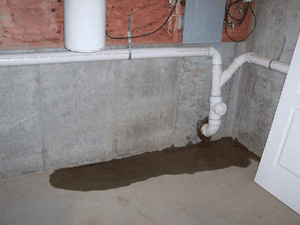
- Circular Rust Spots: Small round orange or rust-colored streaks bleeding down poured concrete walls indicate a corroding steel tie rod inside the wall.
- Perimeter Efflorescence: White, powdery mineral crusting forming in a ring around your main water line entry point.
- Dampness Behind Insulation: Musty odors or hidden moisture collecting behind fiberglass batt insulation directly beneath utility penetration points.
- Trickling Water During Rainstorm Drops: Water droplets forming and running down the wall specifically centered at a pipe entry point.
Frequently Asked Questions (FAQ)
How much does it cost to fix a leaking pipe penetration or tie rod hole in a foundation?
Professional injection repairs for single pipe penetrations or tie rod holes typically range from $350 to $750, depending on accessibility, pipe material, and the severity of active hydrostatic pressure.
Can I use silicone or expanding spray foam to stop a leaking utility pipe?
No. Hardware store expanding foam and silicone caulk are open-cell or topical adhesives that cannot withstand external hydrostatic groundwater pressure. They trap water inside the wall core, accelerating pipe corrosion and concrete spalling.
How long does a pipe penetration injection repair take to complete?
Most professional utility pipe and tie rod injection repairs take less than 2 hours to perform from inside the basement, requiring zero exterior excavation or disruption to your outdoor landscaping.
Stop Utility Line Leaks at the Source
Is water seeping through your basement water main or tie rod entry holes? Don’t wait for a wet basement floor. Contact Crack-X today for a fast, professional photo evaluation and long-term injection repair across Massachusetts, New Hampshire, Maine, Connecticut, or Rhode Island.