
 MORE LOCATIONS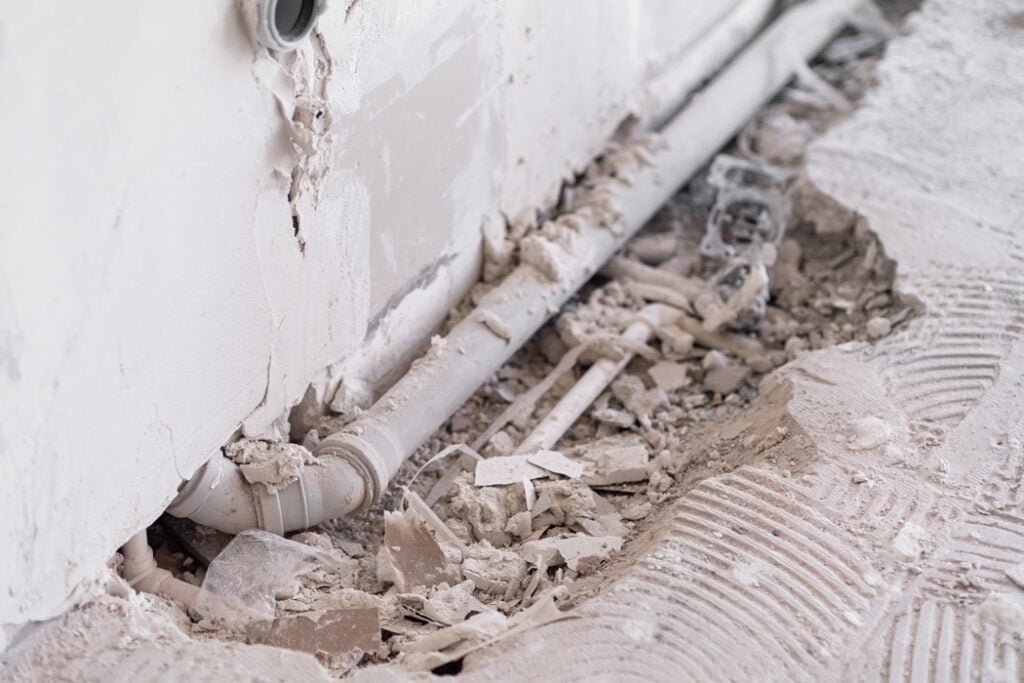
Crack Leaks or Pipe Penetration? What Homeowners Need to Know
If you’re a New England homeowner who’s starting to notice damp spots on a basement wall or a small stream of water after heavy rain, you’re likely trying to figure out whether the leak is coming from a pipe penetration or an actual foundation crack. That uncertainty can be stressful, especially when you don’t know which type of leak is more serious, what caused it, or how fast you need to act. This article will help you understand the difference between pipe penetration leaks vs. crack leaks before you move forward with repairs.
Why Basement Leaks Often Get Misdiagnosed?
Basement water intrusion in New England can be trickier than it looks. Many homes, especially older ones built with fieldstone or poured concrete, were never designed to handle the extreme freeze–thaw cycles, hydrostatic pressure, and heavy seasonal storms common in this region. Water finds any weakness: a utility pipe entry that wasn’t sealed well in the 1980s, a hairline foundation crack widened by winter frost, or a deteriorated patch from a previous DIY fix.
Because these issues can look similar at first glance, homeowners often assume that all leaks are foundation cracks, which delays proper repair and allows water damage to spread.
Understanding Pipe Penetration Leaks
Pipe penetration leaks occur where utility lines pass through the foundation wall, including water lines, sewer pipes, electrical conduit, sump pump discharge lines, and irrigation sleeves. When the concrete was poured, openings were created for these pipes, but over time, the seal around them can fail. These leaks usually occur because the original builder’s sealant has broken down, the pipe has shifted slightly, or the surrounding concrete has shrunk as it cured. In older basements in Massachusetts, New Hampshire, and Connecticut, plumbers often sealed these penetrations with mortar or foam, materials that don’t flex with seasonal movement.
As water builds up in the soil and pushes against the foundation (hydrostatic pressure), moisture finds its way through the weak spot and enters the basement. You’ll often see staining, trickling water during storms, or damp circles around the pipe. The good news: pipe penetration leaks are highly predictable and respond well to modern injection sealants designed to bond and expand with the foundation.
Understanding Foundation Crack Leaks
Crack leaks form directly in the foundation wall itself. They can be thin, long, diagonal, vertical, or step cracks in the mortar joints of block walls. These cracks may start small, but once water pressure, soil shifts, and winter frost get involved, they widen and become a pathway for steady basement leaks. Most New England homes develop at least one foundation crack at some point; it’s simply part of living in a region with harsh seasonal changes.
Over time, water begins seeping through during rainstorms or snowmelt. If not repaired correctly (and permanently), crack leaks can lead to mold smells, damaged belongings, and even structural concerns in severe cases. These cracks are best repaired through epoxy or urethane injection, which fills the entire cavity of the crack from the inside out, preventing water from ever entering again.
Key Differences Between Pipe Penetration Leaks and Crack Leaks
Although they both allow water into the basement, these two issues differ in cause, appearance, and repair method.
Where the Water Comes From
Pipe penetration leaks always appear where a pipe enters the wall. Crack leaks appear anywhere, in the middle of the wall, near windows, near corners, or along mortar joints.
What the Leak Looks Like
Pipe penetration leaks often show circular damp spots or water trickling directly from the pipe entry. Crack leaks follow the crack’s path, forming streaks or a visible wet path.
What Causes the Leak
Pipe penetration leaks are caused by failed sealants or pipe movement. Crack leaks are caused by foundation settlement, soil movement, curing shrinkage, or winter freeze–thaw cycles.
How the Repair Works
Pipe penetration leaks are sealed around the pipe itself using specialized urethane-based materials. Crack leaks require structural-grade epoxy or urethane injection to fill the crack from the inside out.
Why is Correct Identification Important?
Choosing the wrong repair wastes both time and money. A pipe penetration leak can’t be fixed by patching the wall around it. It will eventually reopen. A crack leak won’t stop with surface sealing or waterproof paint.
Misdiagnosing the problem often results in homeowners paying twice, buying dehumidifiers that don’t solve the issue, or delaying repairs until the wall becomes visibly compromised. If you’re unsure, a fast, professional inspection prevents unnecessary stress and ensures the problem is resolved the first time.
How a Professional Determines the Source of the Leak?
A trained technician uses moisture mapping, visual inspection, and material testing to distinguish between pipe penetrations and structural cracks. They examine the seepage pattern, the location of utilities, and the behavior of the leak during heavy rain.
Our team at Crack-X works daily with these issues throughout New England. We often identify the source within minutes and explain the repair options clearly so homeowners feel confident moving forward.
Repair Options for Each Leak Type
Pipe penetration leaks respond best to high-grade urethane injections that expand around the pipe, bond to concrete, and block water pathways. Crack leaks require either epoxy (for structural reinforcement) or urethane (for waterproofing flexibility), depending on your wall’s condition and the amount of movement. Both methods are long-term solutions when applied correctly by a trained technician.
When You Should Call a Professional?
If water is entering your basement, even a small amount, you should schedule a professional evaluation. In New England, small leaks rarely stay small, especially with seasonal soil changes. Whether the source is a pipe penetration or a foundation crack, fast action minimizes damage and prevents costly repairs later.
If you notice signs of water leaks, seek immediate professional help. Call us at 877-727-2259. Our experts at Crack-X will inspect your property and take the necessary measures to fix your leaking pipes. Crack-X is a civil structures repair company operating in Maine and New Hampshire.
FAQs
How do I know if my basement leak is coming from a pipe penetration?
If water appears directly around a pipe where it enters the wall, especially in a circular pattern or during storms, it’s likely a pipe penetration leak. A technician can confirm the source quickly through visual assessment.
Are pipe penetration leaks serious?
They can become serious if ignored because water pressure increases over time and widens the opening. Luckily, they are straightforward to repair with the right injection materials.
What causes cracks in a foundation to start leaking?
Cracks leak when soil pressure, freeze–thaw cycles, or settling forces widen them enough for moisture to pass through. Even hairline cracks can leak once groundwater rises.
Can I fix a basement leak with waterproof paint?
No, waterproof paint only temporarily hides surface moisture. It doesn’t stop water that’s traveling through a pipe penetration or active foundation crack.