
 MORE LOCATIONS
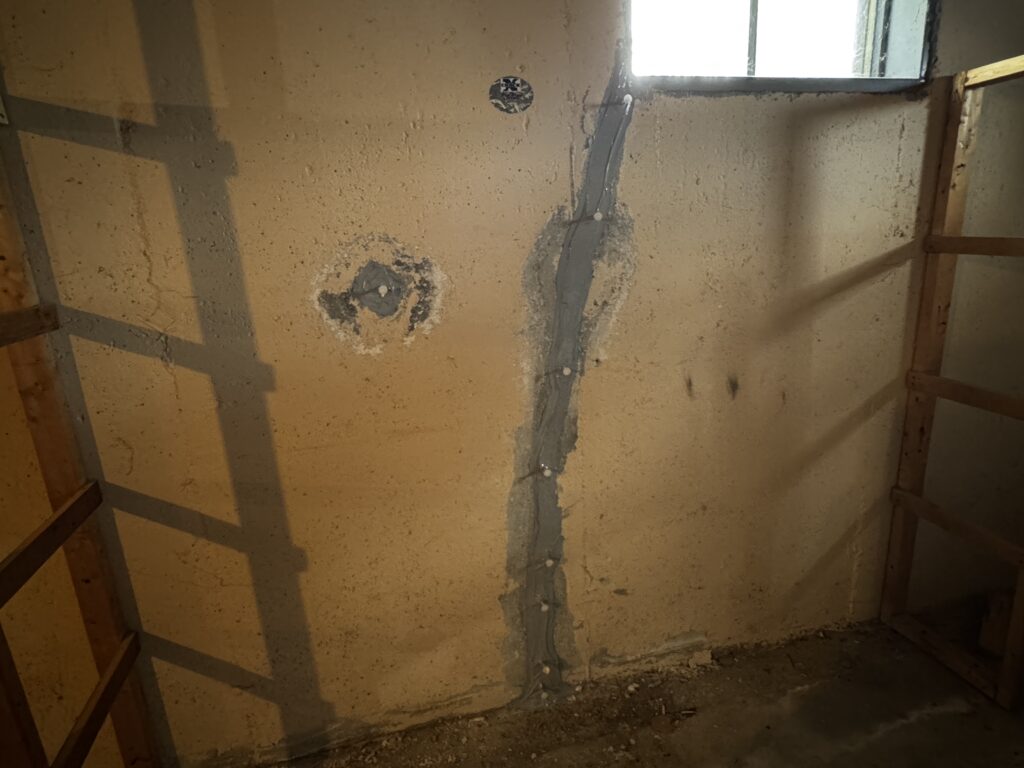
If you have noticed gray dust sweeping off your basement floor, paint peeling off concrete walls in thick sheets, or chunks of concrete crumbling away near the base of your foundation, you are witnessing a destructive process known as concrete spalling. Common across homes in Massachusetts, New Hampshire, and Maine, spalling is a clear indicator that moisture is actively breaking down the inner structural fabric of your foundation wall.
What Is Concrete Spalling in Basement Foundations?
Concrete spalling occurs when the surface layer of concrete delaminates, flakes, pits, or breaks off into fragments or powder. While concrete appears virtually indestructible, it is actually a porous composite material held together by a delicate chemical matrix.
Surface Cosmetic Peeling vs. Deep Structural Deterioration
In its early stages, spalling manifests as fine concrete dusting or minor surface flaking, often causing basement wall paint or drylok coatings to blister and pop off. However, as moisture continues to cycle through the wall, the spalling penetrates deeper into the concrete mass. Over time, large fragments break away, exposing aggregate rock and internal steel reinforcement bars (rebar) to open air and moisture.
How Vapor Drive Forces Water Through Concrete Pores
The primary engine behind spalling is vapor drive. Subterranean soil surrounding your home maintains high relative humidity and groundwater pressure. Through capillary action, water molecules are drawn into the microscopic pores of your foundation wall, migrating from the wet exterior soil toward the drier, air-conditioned or heated interior of your basement.
Primary Causes of Spalling in New England Foundations
New England homes are particularly vulnerable to concrete wall spalling due to local soil conditions, groundwater mineral content, and intense climate variations.
Salt & Mineral Crystallization (Efflorescence Pressure)
As groundwater migrates through a poured concrete wall, it dissolves natural mineral salts within the concrete matrix. When this moisture evaporates off the interior basement wall face, it leaves behind white, powdery mineral deposits called efflorescence. As these mineral salts recrystallize inside the micro-pores near the concrete surface, they expand, creating internal hydraulic pressures exceeding 2,000 PSI—literally popping the outer surface layer off the wall.
Subterranean Saturation & Freeze-Thaw Internal Expansion
In unheated basements or upper foundation walls exposed above the frost line, trapped water inside the concrete pores expands by roughly 9% when freezing weather strikes during New England winters. This continuous freeze-thaw expansion shatters the internal bond between concrete paste and aggregate, causing the wall surface to crumble into loose sand and gravel.
The Dangers of Ignoring Crumbling Foundation Concrete
Ignoring spalling walls in the hopes that a wire brush or coat of thick paint will fix the problem creates several long-term structural and environmental hazards:
Rebar Corrosion & Wall Weakening
Once spalling strips away the protective concrete shell covering embedded steel rebar, moisture and oxygen cause the steel to rust. As rebar rusts, it expands up to six times its original volume—a phenomenon known as rust bursting—which cracks and spalls the surrounding concrete from the inside out, severely compromising load-bearing capacity.
Indoor Air Quality & Concrete Dust Hazards
Continually crumbling concrete produces fine crystalline silica dust that circulates through basement HVAC systems, triggering respiratory issues and creating an environment where basement mold thrives due to elevated relative humidity.
Professional Remediation and Sealing Solutions
Slapping waterproof paint or quick-setting cement over spalling concrete traps moisture inside the wall, accelerating subsurface breakdown. A permanent fix requires stopping water entry at its source.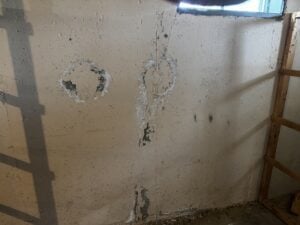
At Crack X, our technicians address spalling by identifying active water intrusion points—such as hairline cracks, tie rod holes, or cold joints—and injecting high-expansion polyurethane or structural epoxy resins. These resins expand through the entire wall depth out to the exterior soil line, locking out moisture completely. Once the water source is eliminated, deteriorated concrete is prepped and restored with commercial-grade polymer resurfacers, restoring full wall strength and integrity.
Frequently Asked Questions
Q: Can I fix spalling basement walls by applying waterproof paint or Drylok?
A: No. Waterproof paint traps migrating moisture inside the concrete wall cavity, which actually accelerates internal spalling and mineral expansion until the paint blisters and peels off in sheets.
Q: Is spalling concrete a sign of total foundation failure?
A: Early-stage spalling is a surface deterioration defect caused by moisture migration. However, if left unaddressed for years, deep spalling can expose rebar to structural corrosion and weaken the wall’s overall load-bearing capacity.
Q: How do professionals repair spalling interior basement walls?
A: Technicians mechanically remove loose, deteriorated concrete, eliminate the primary water entry points via non-invasive low-pressure resin injection, and resurface the wall face with polymer-modified repair mortars.