
 MORE LOCATIONS
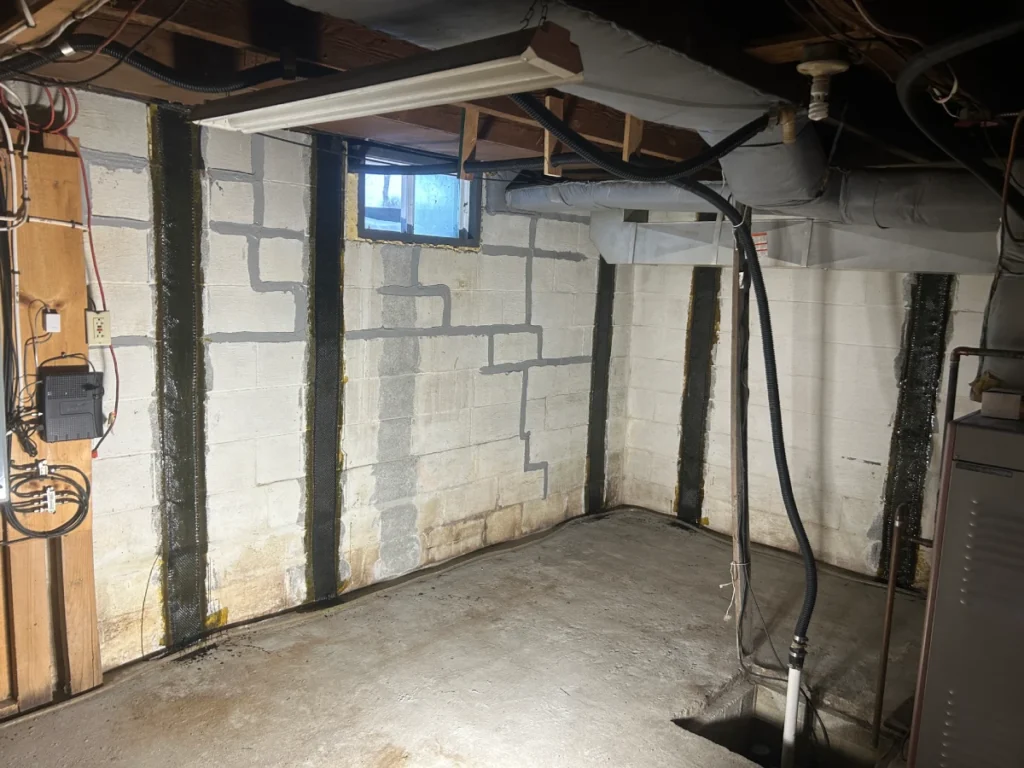
Concrete masonry unit (CMU) foundations, commonly called cinder block or concrete block foundations, are common in New England homes. While block basements offer excellent compressive strength to support a home’s structural load, their unique modular design makes them particularly susceptible to groundwater intrusion and structural degradation over time.
Unlike monolithic poured concrete walls—continuous solid slabs—block foundations rely on hundreds of individual masonry units bound by mortar joints. In regions like Massachusetts, New Hampshire, Maine, Connecticut, and Rhode Island, high soil moisture, expansive clay, and freeze-thaw shifts place immense strain on these mortar seams. Understanding how cinder block foundations fail and how specialized repair techniques eliminate water leaks is key to preserving your home’s structural integrity.
How Concrete Block Foundations Differ from Poured Concrete
Addressing moisture issues in a cinder block basement requires an understanding of how block walls are constructed and how water behaves inside them.
The Hollow Core Architecture
Standard concrete blocks feature two or three hollow interior cavities (cores). When builders construct a block wall, these cores align vertically. Unless you fill these hollow cavities with solid concrete grout and rebar during construction, they form continuous vertical channels inside your foundation wall where water can collect invisibly before entering your living space.
The Vulnerability of Mortar Joints
A typical basement wall contains hundreds of linear feet of mortar joints. Mortar is a porous mixture of sand, cement, and lime designed to cushion and bond masonry blocks. Because mortar is significantly softer and more porous than the concrete blocks, it becomes the path of least resistance for trapped groundwater under pressure.
Common Causes of Failure in Block Foundation Walls
When external drainage fails, or hydrostatic pressure builds around a basement, cinder block walls begin to show distinct signs of distress:
1. Mortar Joint Degradation & Efflorescence
Decades of ground moisture exposure gradually dissolve the bonding agents within masonry mortar. As groundwater seeps through the joints, it leaves behind white, powdery mineral deposits known as efflorescence. Over time, the mortar crumbles into loose sand, creating open gaps for active water streams.
2. Water-Filled Block Cores
Groundwater entering through small exterior hairline cracks or poorly sealed above-grade block seams flows downward into the hollow block cores. Water collects at the bottom course of blocks near the basement floor, building hydraulic head pressure until it forces its way through interior mortar seams or wall-to-floor expansion joints.
3. Stair-Step & Horizontal Structural Cracking
Uneven soil settlement or expansive soil pressure exerts lateral force against block walls. This pressure causes characteristic stair-step cracks following the mortar lines between blocks. If lateral soil pressure becomes severe, a continuous horizontal crack may form along a middle mortar joint, indicating that the wall is bowing inward and requires structural stabilization.
Professional Repair Methods for Leaking Cinder Block Walls
Fixing a leaking block foundation requires specialized masonry and waterproofing techniques tailored specifically for hollow modular structures:
Mortar Joint Repointing & Elastomeric Joint Sealing
Technicians grind out damaged, crumbling interior mortar joints to sound masonry and repoint with high-strength, water-resistant masonry mortars. Specialized flexible elastomeric sealants are applied along critical joints to absorb minor building shifts without cracking.
Hollow Core Grouting & Injection
To eliminate internal water reservoirs, technicians drill injection ports into compromised block cavities and inject specialized hydrophobic resins or cementitious pressure grouting. This fills internal voids, blocks water paths, and reinforces the wall framework.
Interior Drainage & Weep Hole Pressure Relief
When external groundwater pressure is extreme, professionals relieve trapped water inside block cores by drilling weep holes into the bottom course of blocks. This directs trapped water into a subterranean perimeter drain tile system and sump pump, permanently lowering hydrostatic pressure against the foundation wall.
4 Critical Maintenance Tips for Block Foundation Owners
- 1. Keep Surface Runoff Away from Walls: Extend downspouts at least 6 to 10 feet from the foundation to prevent roof water from saturating exterior block joints.

- 2. Avoid Applying Rigid Surface Paints over Wet Mortar: Waterproofing paints applied over crumbling mortar trap moisture inside the block wall, accelerating masonry decay.
- 3. Monitor Horizontal Crack Lines: Inspect block walls annually for stair-step or horizontal crack expansion, especially along the middle course of blocks.
- 4. Maintain Outdoor Soil Grading: Ensure surrounding lawn soil slopes downward away from the foundation wall at a minimum pitch of 6 inches over 10 feet.

Frequently Asked Questions (FAQ)
Q1: Why are my cinder block basement walls weeping water near the floor?
A: Water enters the hollow interior cores of the blocks higher up the wall or from exterior groundwater saturation. Gravity and hydrostatic pressure force this trapped water to accumulate in the bottom course of blocks, where it weeps through the bottom mortar joint onto your floor.
Q2: Can you inject epoxy into a cinder block wall crack like a poured concrete wall?
A: Standard high-pressure epoxy injection designed for solid poured concrete does not work on hollow cinder blocks because the resin escapes into the hollow block cores. Block walls require specialized masonry repointing, elastomeric joint sealants, or targeted core grouting.
Q3: Are horizontal cracks in a cinder block foundation dangerous?
A: Yes. Horizontal cracks along block mortar lines indicate significant lateral earth pressure pushing the foundation wall inward. These cracks require prompt professional evaluation and potential reinforcement to prevent further wall bowing or structural failure.
Stop Water Leaks in Your Concrete Block Basement
Dealing with wet mortar joints, efflorescence, or damp cinder block walls? Trust New England’s foundation repair experts. Contact Crack-X today for a fast photo evaluation or to schedule an on-site block foundation inspection across Massachusetts, New Hampshire, Maine, Connecticut, or Rhode Island.